You aren’t just looking for a plot of dirt, you are looking for the backdrop of your next chapter.
For most prospective custom home clients we speak with, the challenge isn’t a lack of options, it’s the overwhelming disconnect between “lifestyle vision” and “technical feasibility.”
You might dream of a secluded equestrian estate, but struggle to find soil suitable for septic in a specific county. You might envision a multi-generational compound, only to be blocked by rigid HOA covenants.
In the migration we are seeing from “Big City” density toward the “Innovation Balance” of the Triangle, where you build determines how you live. At Hafsa Building Group, we help you evaluate the Triangle’s sub-markets through a lens of lifestyle compatibility, regulatory reality, and long-term value.
The Macro Decision: Raleigh vs. Charlotte
Before narrowing down to a specific subdivision, many of our clients find themselves weighing the two giants of North Carolina: the Charlotte Metro vs. the Greater Raleigh area.
While both offer economic stability, the cultural and financial “vibe” dictates the build strategy. Our research into the North Carolina custom home market 2026 indicates a distinct split:
- The Charlotte Profile: Driven by corporate finance and banking, Charlotte offers high density. However, land rarity in premium areas like Myers Park has pushed luxury custom builds to benchmark around $1,200 per square foot.
- The Raleigh/Triangle Profile: Driven by STEM, academia, and healthcare, this market prioritizes “Innovation Balance”, access to top-tier amenities without the suffocating density.
The Cost Reality
For those evaluating the bottom line, the “Raleigh Premium” is real but offers higher value per acre. Custom home building in Raleigh currently averages a construction baseline that is higher than Charlotte’s. However, the total project cost in the Triangle is often more controllable due to better land availability in satellite communities.
How to Match Location to Lifestyle
Once you have committed to the Triangle, the question becomes: Which micro-market serves my daily life? We categorize our service areas not just by geography, but by the lifestyle they support.
1. The “Active Family” Lifestyle: Wake Forest, Cary, & Apex
The Priority: Minimizing commute friction while maximizing lot usability.
Families often default to searching for custom home builders cary nc or Apex simply for the school districts. While the schools are exceptional, the real differentiator here is infrastructure.
- The Trade-off: In Cary and Apex, you are paying for proximity to Research Triangle Park (RTP). The trade-off is often lot size.
- The Opportunity: Wake Forest offers a compelling alternative. It provides a historic downtown feel with slightly larger acreage availability for the same budget, allowing for broader backyards and outdoor living spaces that are often squeezed out in denser Cary subdivisions.
2. The “Rural-Luxe” & Equestrian: Johnston County
The Priority: Privacy, land stewardship, and freedom from HOAs.
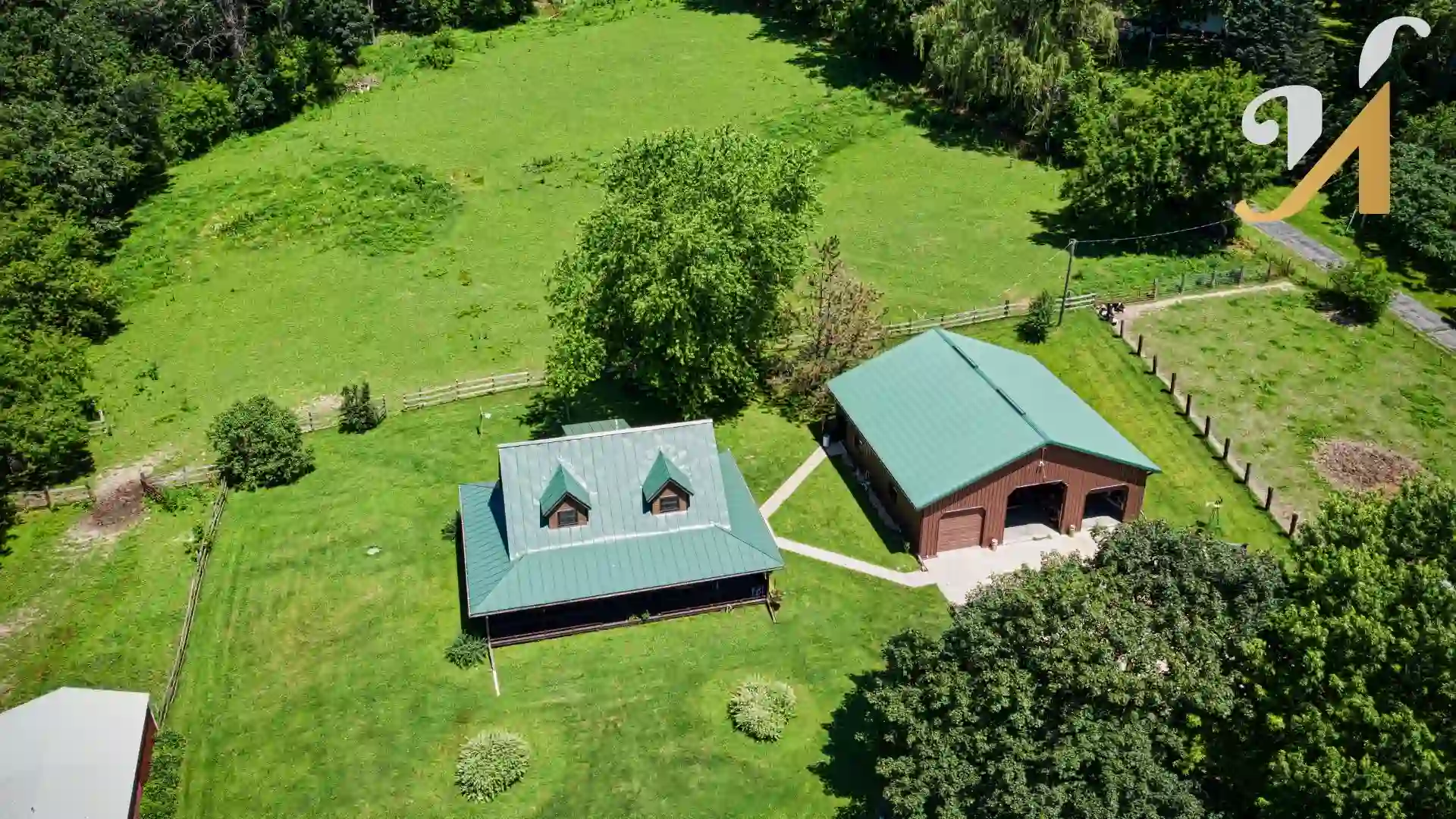
There is a significant migration of wealth moving slightly east. If you are looking for new homes in johnston county nc, you are likely seeking “pasture privacy.” This is where the dream of the farmhouse aesthetic meets reality.
The Feasibility Check: Building rural, specifically for equestrian use, requires more than just acreage.
- Soil Quality: Does the land percolate for the size of home (and number of bathrooms) you intend to build?
- Zoning: Is the property zoned for livestock?
- Topography: Is the land flat enough for a barn and riding arena without massive grading costs?
Johnston County (Clayton, Cleveland area) is currently the “Goldilocks” zone for this lifestyle, offering the land necessary for estate-style living while remaining within a 30-minute drive of Raleigh.
3. The “Multi-Generational” Vision: Urban Infill & The Missing Middle
The Priority: Aging in place and asset flexibility.
A massive shift in our market is the demand for building a mother in law suite or Accessory Dwelling Unit (ADU). This is about designing a custom estate with two distinct living structures from day one.
The Regulatory Breakthrough:
Raleigh’s Ordinance 315-TC-461 has fundamentally changed the game. This regulation now allows for independent tiny homes and ADUs (up to 600-800 sq ft) on many residential lots.
- The Strategy: Instead of buying a massive single structure, savvy clients are building a primary residence and a luxury cottage court on the same lot. This allows for multi-generational living or a high-value rental asset.
- The Constraint: This is highly dependent on specific municipal zoning. While Raleigh is progressive here, outlying HOAs may still prohibit it.
The Technical Reality of Land & Regulation
Falling in love with a location is easy, but verifying it is buildable is where the risk lies.
The “Off-Market” Challenge
In the current competitive landscape, approximately 25% of premium land and teardown opportunities in Raleigh sell off-market. If you are relying solely on Zillow, you are seeing the inventory that others have already passed over. Because we operate deeply within these communities, we often identify suitable homesites before they hit the public MLS.
Understanding Costs and Ordinances
One of the most dangerous phases of the evaluation process is relying on generic online calculators.
You might search for homeadvisor cost to build a house per square foot 2026, but those national averages rarely account for North Carolina’s specific soil conditions, local labor markets, or the zoning ordinance revisions 2025 that impact impervious surface limits.
At Hafsa Building Group Co., we utilize a fixed-price model. We don’t guess at these costs, we define them. This transparency is vital when comparing a custom build against buying an existing resale home.
Allowing For the Perfect Fit: The Hafsa Approach
We believe your home should be a direct reflection of your values, not a compromise based on inventory.
- Site Feasibility: Before you sign a contract for land, we help you determine what is a homesite versus what is just raw land. We assess utility access, topography, and solar orientation.
- Design for Context: Whether it’s a modern minimalist home in Durham or a traditional estate in Fuquay-Varina, we utilize 3D design tools to show you exactly how your home will sit on the specific lot you’ve chosen.
- Process Transparency: Our custom home building process is managed through an online portal, giving you real-time updates on your project, ensuring that the location you chose delivers the lifestyle you promised yourself.
The Next Step in Your Evaluation
You have analyzed the neighborhoods and weighed the lifestyle benefits. The next step is to validate your vision against on-the-ground reality.
Do not leave your dream home to chance or generic cost calculators. Let’s discuss your ideal location and determine if your architectural vision aligns with the local zoning and land possibilities.
Contact Hafsa Building Group for a site feasibility consultation.