
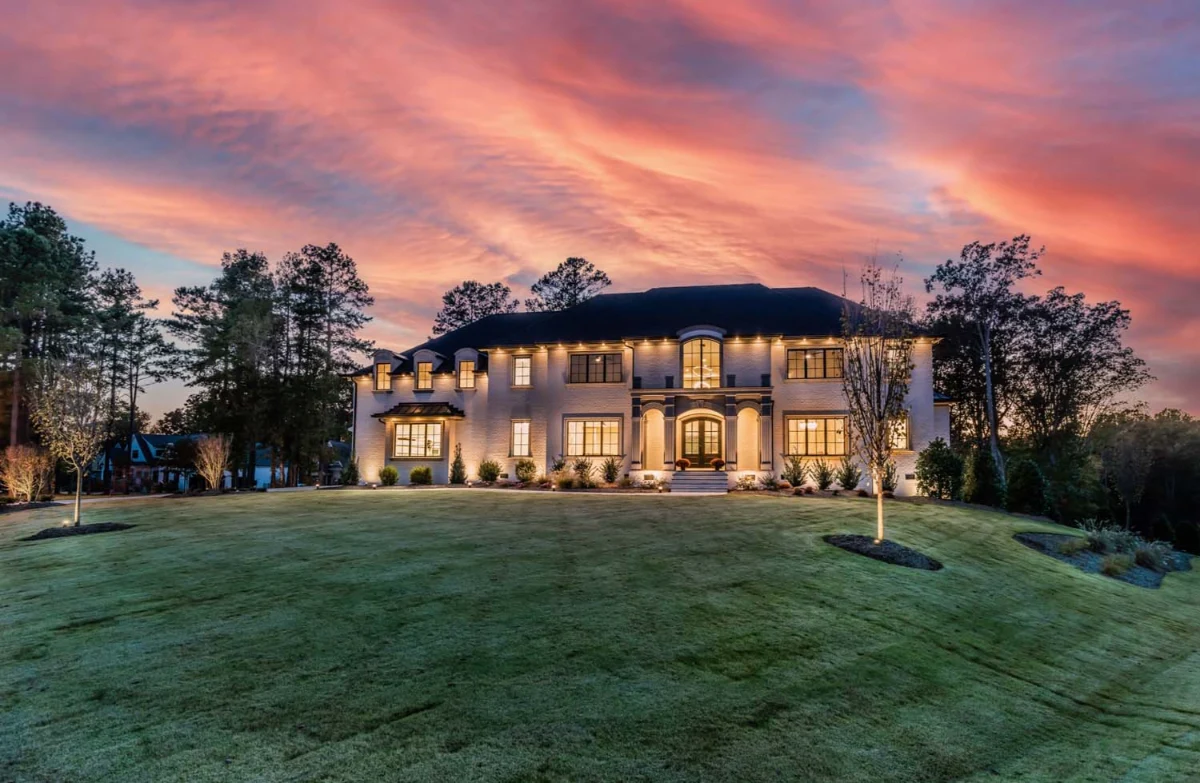
When you decide to build a custom home in North Carolina, one of the first and most defining choices you will make is selecting your architectural style. But this decision goes far beyond curb appeal.
The style you choose creates the structural DNA of your home, it dictates how natural light moves through your living spaces, how well the home breathes in humid Southern summers, and how effectively the floor plan accommodates your daily routine.
The North Carolina custom home market is currently undergoing a massive strategic shift. Moving away from the Modern Farmhouse saturation of 2021–2023, we are now entering an era of “Personalized Luxury Minimalism.” Today’s high-intent buyers are prioritizing homes that blend regional character with highly functional, forward-thinking floor plans.
At Hafsa Building Group, we help with the evaluation phase of your home-building journey. You need a decision-making strategy that connects architectural form to practical lifestyle benefits, climate resilience, and long-term resale equity in the Triangle and beyond.
Key Takeaways
- Choosing an architectural style for a custom home affects more than appearance, since it shapes how the home functions, handles climate, and fits your daily lifestyle.
- Popular North Carolina custom home styles each offer different strengths, with buyers increasingly favoring designs that combine character, energy efficiency, and practical floor plan flow.
- The best home style depends on matching your aesthetic goals with your lot, local climate, material choices, and long-term resale considerations.
North Carolina Architectural Trends
The way we design and build homes is evolving rapidly. Real estate data reveals that 56% of buyers now prefer homes with distinct architectural “character” over generic new builds.
Consequently, traditional and character-rich styles are proving to be safer long-term investments, especially in competitive urban hubs like Raleigh, Durham, and Chapel Hill.
Simultaneously, sustainability is no longer treated as a premium upgrade. Net-zero capability and eco-conscious materials are transitioning into standard expectations for high-quality custom builds.
As you weigh the average cost to build a house, it becomes clear that investing in an architectural style optimized for our local climate pays massive dividends in both energy efficiency and sustained property value.
4 Types of Architectural Styles
Here is a deep dive into the most sought-after styles and aesthetics defining North Carolina’s premier neighborhoods today.
1. Contemporary Craftsman
The classic Craftsman was born out of a desire for handcrafted quality and organic materials. The “Contemporary Craftsman” update preserves this but modernizes the execution.
- Defining Characteristics: Deep, welcoming front porches, tapered columns, overhanging eaves, and exposed structural elements.
- Material Palette: Heavy reliance on locally sourced stone, timber, and rich earth tones that blend seamlessly into wooded lots.
- Internal Flow: Craftsman homes traditionally favor a “cellular” layout, distinct, purpose-built rooms rather than a cavernous open space. This offers unmatched privacy for remote work and multi-generational living.
- Regional Fit: Highly coveted in the Piedmont and areas demanding end-to-end home construction in Orange County, where historical context and neighborhood character drive resale value.
2. The Modern Farmhouse Mansion
While the stark white-and-black Modern Farmhouse of five years ago is fading, the style itself is evolving into something far more sophisticated and enduring. We refer to this as “Curated Maximalism.”
- Defining Characteristics: Steeply pitched gable roofs, expansive covered porches, and large windows.
- Material Palette: Moving away from standard board-and-batten toward mixed-material exteriors incorporating brick, reclaimed tobacco barn wood, and metal roofing accents.
- Internal Flow: These homes bridge the gap between traditional coziness and modern fluidity, making them perfect for entertaining.
- Regional Fit: Ideal for spacious suburban lots. If you are evaluating a custom home builder, this evolved farmhouse style perfectly suits the expansive properties and family-centric lifestyle of the area.
3. Coastal Minimalist
Drawing inspiration from North Carolina’s shoreline, Coastal Minimalism focuses on ease, light, and resilience against the elements.
- Defining Characteristics: Elevated foundations, deep overhangs for shade, and an emphasis on outdoor-indoor living connectivity.
- Material Palette: Coastal-grade, moisture-resistant siding, pale wood tones, and impact-resistant glass.
- Internal Flow: Features a biophilic flow that prioritizes cross-ventilation and natural light. It dissolves the boundary between the interior living space and the outdoor environment.
- Regional Fit: While born on the coast, its climate-resilient finishes and light-filled layouts are increasingly popular statewide to combat intense summer humidity.
4. Contemporary Custom
Sleek, bold, and entirely custom, Contemporary architecture reflects the present and future. It breaks away from traditional symmetry in favor of striking geometric profiles.
- Defining Characteristics: Flat or low-pitch roofs, asymmetrical facades, and massive floor-to-ceiling glass integration.
- Material Palette: Steel, concrete, commercial-grade glass, and sustainable composites.
- Internal Flow: Fundamentally “fluid.” Contemporary homes utilize wide-open, barrier-free spaces that allow light to penetrate deep into the core of the home.
- Regional Fit: The preferred aesthetic for tech-forward buyers in the Triangle and those seeking custom home builders capable of executing high-precision, modern designs.
The “Internal Flow” Comparison
When comparing styles, the most critical element you must evaluate is the internal flow. How a home is sectioned ultimately dictates how you will live in it.
- Cellular Layouts (Traditional, Colonial Revival, Craftsman): These styles feature walls that define specific, singular-purpose rooms.
- The Advantage: Better acoustic control, higher energy efficiency for heating/cooling specific zones, and dedicated private spaces (crucial for home offices).
- Fluid Layouts (Contemporary, Modern Coastal): These styles remove load-bearing visual barriers to create vast, continuous spaces.
- The Advantage: Unmatched natural light distribution, highly social environments, and maximum flexibility in furniture arrangement.
- The 2026 Winner Transitional Design: We are seeing a massive surge in “Transitional” floor plans that blend the two. These designs feature a fluid core (kitchen, dining, and great room) surrounded by cellular outer wings (private studies, prep kitchens, and secluded primary suites).
Sourcing Material for the North Carolina Climate
A truly custom home isn’t just built in a location, it is built of the location. Regional material sourcing is a hallmark of elite homebuilding.
Rather than relying on generic, imported materials, incorporating Appalachian Oak for flooring, Piedmont Slate for hardscaping, or regionally milled timber roots your home in its environment.
This approach is highly practical. Materials sourced from the mid-Atlantic are inherently adapted to our specific temperature fluctuations and humidity levels, allowing for superior longevity and reduced maintenance costs.
How to Choose the Best Homesite for Your Custom Build
Choosing the right style requires aligning your personal aesthetic with the physical realities of your property. Before finalizing your blueprints, you must understand your homesite and how its unique topography restricts or enables certain styles.
- Lot Topography: A steeply sloped wooded lot beautifully accommodates a multi-level Contemporary or Craftsman walk-out basement, whereas a flat, expansive lot is the perfect canvas for a sprawling Modern Farmhouse.
- Sun Orientation: Contemporary homes with massive glass facades must be carefully oriented to avoid intense Western sun exposure in North Carolina summers, whereas Coastal designs utilize deep overhangs specifically to manage this heat gain.
- Neighborhood Context: While you want your custom home to stand out, building an ultra-modern concrete cube in a neighborhood of historic Colonial Revivals can negatively impact your long-term resale value..
Let Hafsa Building Group Bring Your Vision to Life
Selecting an architectural style is just the beginning. The success of your build relies entirely on the execution. Handling material choices, structural engineering, and permitting requires a builder who operates with absolute transparency.
At Hafsa Building Group, we remove the anxiety from custom home construction through guaranteed fixed-price contracts and communication. We utilize advanced 3D design tools to let you walk through your chosen architectural style before a single shovel hits the dirt.
If you are evaluating custom home builders or looking to build anywhere across the greater Raleigh region, your next step is a strategic consultation. Let’s sit down, review your homesite, and design a home that perfectly captures your aesthetic vision while delivering the structural integrity and functional flow your lifestyle demands.